

Korean food has found a confident place in Singapore. The restaurants are busy, the ingredients are stocked in supermarkets, and the flavours, from the sharp tang of kimchi to the smoky char of grilled meat, have become genuinely familiar. The drinks that have travelled alongside that food, however, tell a quieter story. Soju is widely known, usually in its commercial form. Beer fills the gaps. And makgeolli, one of Korea’s oldest and most characterful brewed drinks, has remained almost entirely off the radar.
That is beginning to change. As interest in Korean culture deepens and drinkers here grow more curious about what sits beyond the familiar green bottle, Korean craft alcohol is starting to arrive in Singapore properly: sourced directly from independent breweries, handled with care, and available in a range that most people here have never had the chance to explore. This guide covers what makgeolli actually is, how it is made, why the craft version is a different proposition entirely from what most people have encountered, and where to find it in Singapore.
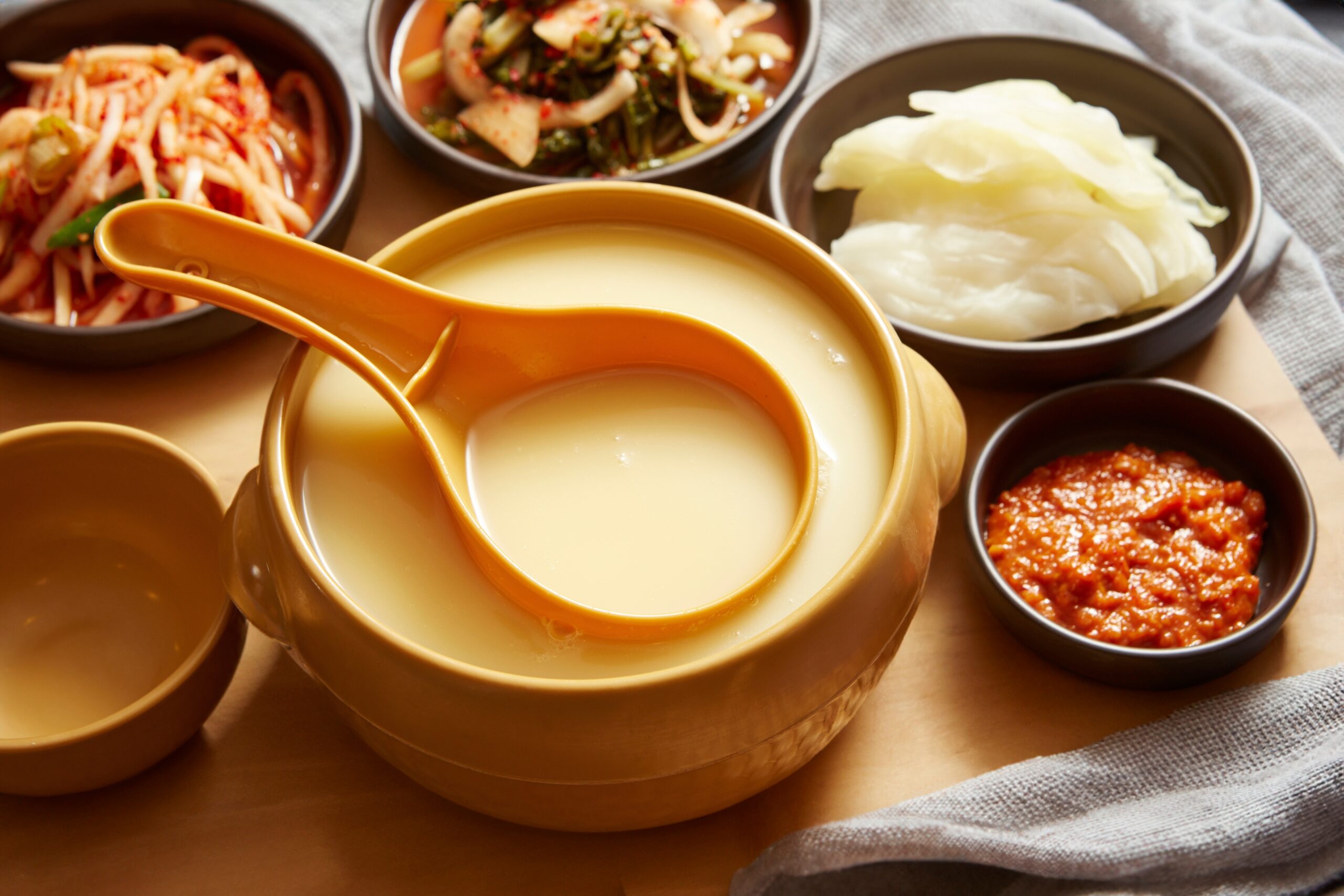
Makgeolli is a fermented rice wine: not a spirit, not a beer, and not quite like any other fermented drink in the region. It is brewed from rice, water, and nuruk, the natural fermentation starter at the heart of Korean brewing, and left unfiltered, giving it a distinctive cloudy, milky pour. Alcohol by volume (ABV) sits typically under 6 per cent, and many bottles carry a gentle natural carbonation that develops after brewing. The flavour can range from lightly sweet and effervescent to earthy and grain-forward, depending on the brewery, the rice variety, and how the fermentation has been managed.
Makgeolli falls within a broader family of traditional Korean alcohol. The styles within that family share similar foundations, rice, water, and nuruk, but differ significantly in how they are made, how they taste, and when you might reach for them.
| Style | Base | Filtration | ABV Range | Flavour Character | Best For |
| Makgeolli | Rice, water, nuruk | Unfiltered (cloudy) | 4–8% | Milky, lightly sweet, gentle fizz, sometimes savoury | Easy introduction, food pairing |
| Takju | Rice, water, nuruk | Unfiltered (cloudy) | 10–13% | Broader category; makgeolli is one style within it | Casual drinking, pairing |
| Yakju | Rice, water, nuruk | Filtered (clear) | 9–16% | Clean, refined; can range from delicately sweet to dry, with layers that develop slowly in the glass | Considered drinking occasions |
| Gwahaju | Rice wine, distilled spirit | Varies | 10–17% | Rich and sweet; aromatic, with notes of fruit and florals from the rice wine base, rounded by the warmth of the added soju | Sipping; richly seasoned dishes |
| Craft Soju | Rice, sweet potato, barley, or other grains | Distilled | 20–70% | Spirit-like complexity; clean or characterful depending on base | Sipping, pairing with bold food |
Makgeolli is a specific style of Korean rice wine, and the term is worth using precisely. Korean craft alcohol is the broader category that includes traditional rice wines like yakju and gwahaju, craft-distilled soju, Korean craft beer, and other heritage styles. Makgeolli is a compelling entry point into that world, but there is considerably more to explore beyond it.
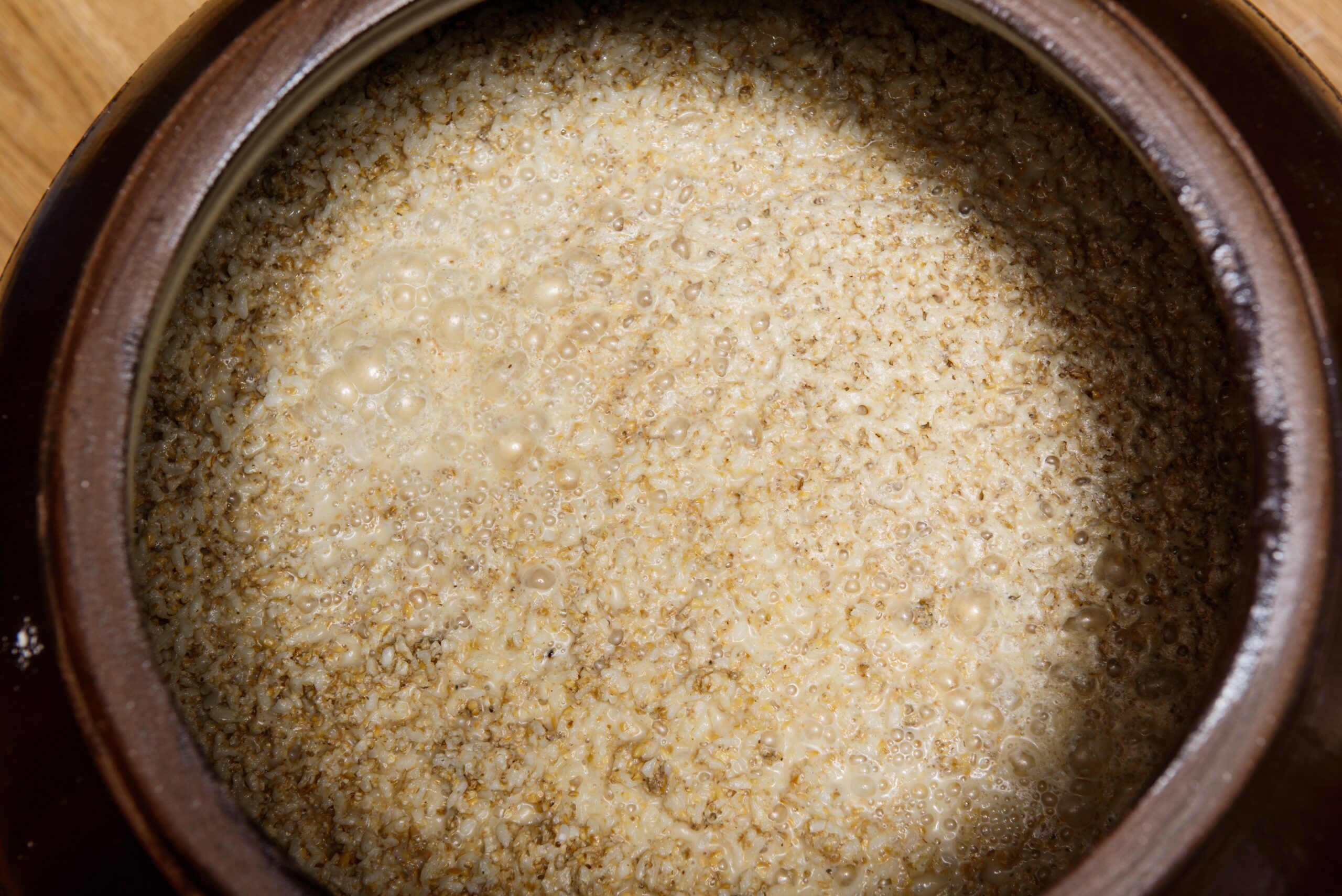
The foundation of every bottle of Korean traditional alcohol is nuruk: a fermentation starter made by inoculating grain with wild moulds and yeasts, then allowing it to develop naturally. Nuruk does something that commercial yeast alone cannot. It breaks down the starches in rice simultaneously with fermentation, converting complex carbohydrates into sugars and then into alcohol in a single, integrated process. The flavour complexity that results, the subtle earthiness, the natural acidity, the depth that develops over days of fermentation, comes directly from the character of the nuruk used.
The brewing process begins with the rice. Grains are washed, soaked, and steamed before being combined with water and nuruk in fermentation vessels. From there, the mix is left to ferment over several days, sometimes in multiple stages, with the brewer managing temperature and timing to guide the flavour in the direction they want. Some breweries use a single fermentation stage; others use two or three, adding fresh rice at intervals to build additional complexity.
Craft makgeolli is made without preservatives, artificial flavouring, or colouring. That matters for a straightforward reason: the sweetness in a well-made bottle comes from the rice itself, released naturally as nuruk and yeast break down its starches during fermentation. Adding sweeteners or flavourings would mask precisely what makes the drink interesting. Many craft labels are also unpasteurised, which means the fermentation continues slowly after bottling, producing a gentle natural carbonation that builds quietly over time.
Now that the brewing process is clearer, the differences between these styles are easier to see. Takju and yakju both begin with the same core: rice, water, and nuruk. What happens at pressing is where they diverge, and that difference shapes everything from the colour in the glass to the occasion you pour it for.
Takju is left cloudy. The sediment, the solids from the rice and fermentation, stays in the drink, giving it body, texture, and that characteristic milky appearance. Makgeolli is a style of takju: the most widely recognised one, typically lower in alcohol by volume and often with a lighter, more approachable flavour profile. Other takju expressions can run a little richer or more complex depending on the rice variety and the brewery’s methods, but they share that unfiltered, cloudy character.
On the other hand, yakju takes the liquid in a completely different direction. After fermentation, it is filtered to remove the sediment that gives takju its body. What remains is cleaner and more refined, with a flavour profile closer to a well-made rice wine or a delicate sake: often floral or subtly sweet, and noticeably more layered on the palate. ABV tends to run higher, typically between 9 and 16 per cent, and the drinking occasion shifts accordingly since yakju rewards a slower pace and a little more attention.
Gwahaju is a different kind of tradition entirely. Where makgeolli and yakju both ferment to completion before being left cloudy or filtered, gwahaju is made by adding distilled soju partway through fermentation to stop the process before it finishes. With the yeast activity halted, the residual sugars from the rice remain in the drink rather than converting fully to alcohol, which gives gwahaju its characteristic sweetness and a noticeably higher ABV than the other styles in this family.
The result is a fortified rice wine, closer in concept to a port or sherry than to the fermented styles it shares a shelf with. The flavour tends toward rich sweetness, with the aromatic depth of the cheongju base, notes of fruit, pear, and florals, rounded out by the warmth of the soju. There is also a history to the style: gwahaju translates literally as “liquor that passes through summer,” a name that reflects its origins as a solution to the warm months when fermented drinks spoiled quickly. The higher alcohol content was the preservation method.
The range across these styles is genuinely broad, and there is no wrong place to start. If you would like to taste before committing to a bottle, Odem, a Korean restaurant and craft-alcohol bar in New Bahru, carries Sool Cellar labels by the glass. It is a relaxed way to work through the full spectrum, from a light, lively makgeolli to a structured yakju or a richly sweet gwahaju, and find what suits your palate before you order.
Most people’s first encounter with makgeolli comes from a convenience store shelf or a mass-market import. That version, produced at scale with commercial yeast and containing added sweeteners and preservatives, is a reasonable introduction to the category. What it cannot do is show you the range and depth that small-batch brewing actually produces. The craft version starts from a genuinely different place, and the gap between the two is about as wide as the one between a supermarket lager and a well-made craft beer.
Craft makgeolli differs from that starting point in almost every meaningful way. The fermentation starter is one of the clearest distinctions. Where industrial producers use commercial yeast, craft breweries often work with their own nuruk, developed and refined in-house over the years. The character of that nuruk, its particular mix of moulds and wild yeasts, shapes the flavour of every batch in ways that a standardised input cannot replicate. It is the brewery’s fingerprint, present in every bottle they produce.
Carbonation is another marker. The gentle fizz in a craft bottle is a byproduct of live fermentation continuing after the bottle is sealed. Forced carbonation in commercial products is consistent but flat by comparison: bubbles without the texture or the sense that something is still happening inside the bottle.
Beyond those fundamentals, the range of what craft breweries are producing has expanded considerably. Some labels incorporate barrel ageing, developing depth and structure that takes the drink into genuinely complex territory. Others infuse fruits, flowers, or herbs during fermentation, drawing on botanicals grown on brewery-owned farms or sourced from trusted local producers. That connection to specific ingredients and places is part of what defines the craft end of the category. Where a brewer farms their own ingredients, the care put into what they grow feeds directly into what ends up in the glass, supporting sustainable agricultural practices that matter to the producers themselves. At Sool Cellar, these are precisely the kinds of breweries we seek out when we source in Korea: producers for whom the ingredient story is inseparable from the bottle.
For anyone already familiar with natural wine or craft beer, the comparison is an easy one to draw. The same principles are at work: real ingredients, minimal intervention.
Finding craft makgeolli in Singapore has, until recently, been genuinely difficult. The drink is unpasteurised and temperature-sensitive, which means importation requires a cold chain from brewery to bottle shop: a continuous requirement from the moment the bottles leave Korea, not a logistical afterthought. Beyond the handling challenge, the category has had limited visibility at the retail level here. Furthermore, most buyers and distributors have not had direct access to independent Korean breweries, and the craft end of the market has remained largely invisible as a result.
Sool Cellar was built to close that gap. Our team sources directly from independent breweries in Korea, visiting producers, tasting through batches, and selecting labels that reflect genuine craft standards rather than what is most convenient to import. The portfolio covers over 40 labels of traditional Korean alcohol, delivered islandwide through a cold chain that maintains the integrity of every bottle from the moment it leaves the brewery.
For anyone who wants to explore the category before committing to a bottle, Odem, a Korean restaurant and makgeolli bar at New Bahru, is a good place to start. Sool Cellar labels are available by the glass there, which makes it convenient for you to taste across styles and find what suits your palate.
Then, when you are ready to explore, our Korean makgeolli collection is a good place to begin. Browse by flavour, read the tasting notes and let the range guide you to something interesting.
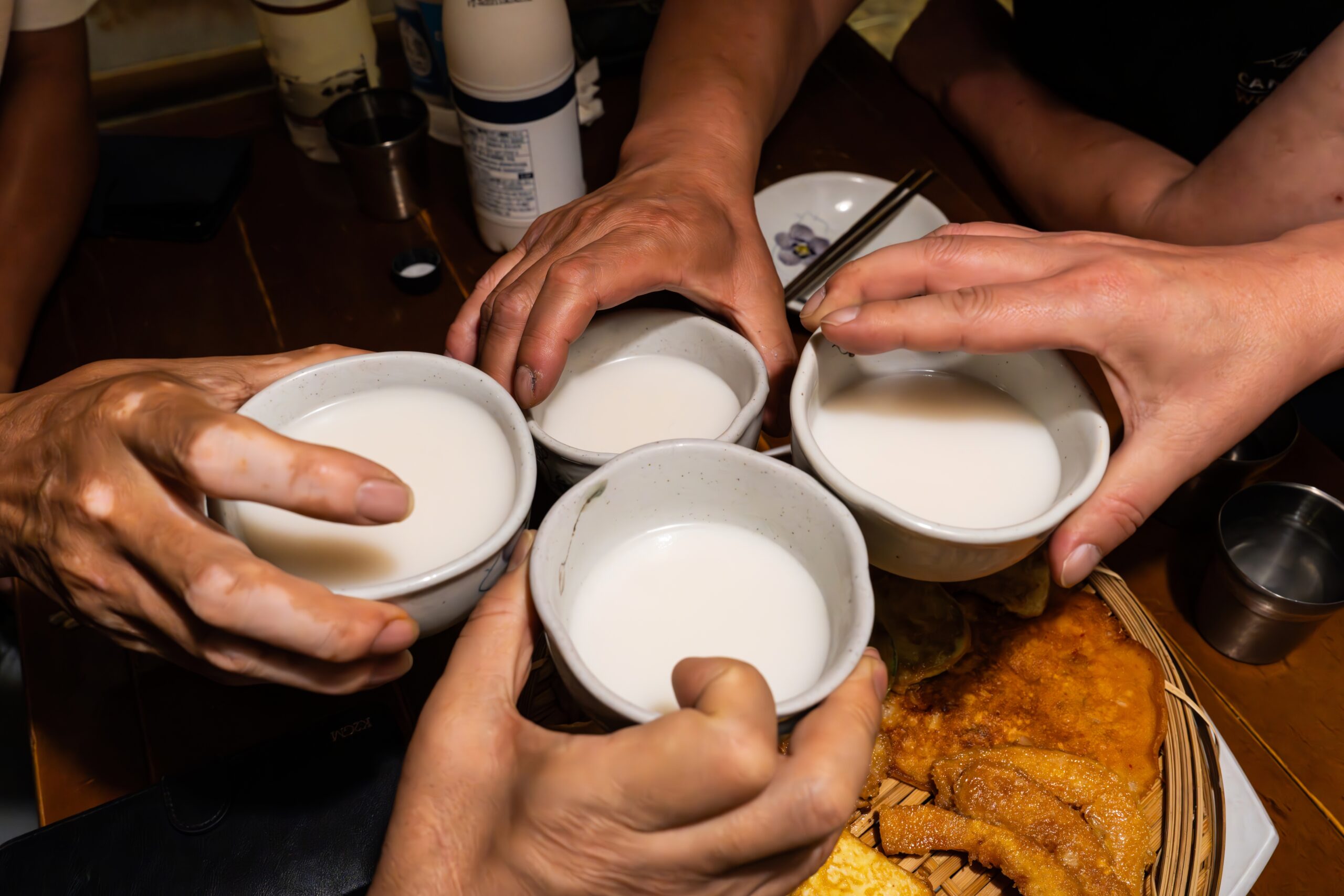
Makgeolli is not a drink that requires an occasion. It belongs at a casual weeknight meal as naturally as it does at a table set for guests, and the range of styles means there is something appropriate for almost any context. A light, sparkling bottle alongside Korean fried chicken or a simple bowl of noodles. A more considered yakju poured at the end of a meal, the way you might reach for a wine with some depth behind it. The bottles also travel well as gifts: an approachable makgeolli for a curious friend, a complex yakju for someone who appreciates a serious drink, or a barrel-aged soju for the one who already thinks they know what Korean alcohol tastes like.
Exploring the category does take a certain openness, and having access to the right bottles makes all the difference. The craft labels we carry at our Korean alcohol store represent some of the most interesting brewing happening in Korea right now: independent producers working with traditional methods, quality ingredients, and a genuine understanding of what makes each style worth drinking. Most of what we stock is simply not available anywhere else in Singapore.
The best place to start is wherever your palate points you. Pick a flavour profile that sounds appealing, pour it cold, try it with food, and let the range open up from there.
Korean rice wine covers more ground than most drinkers expect. Two bottles from the same family, poured in the same

Craft soju is distilled from real grain. Learn how traditional Korean soju is made, why its ABV varies so widely,
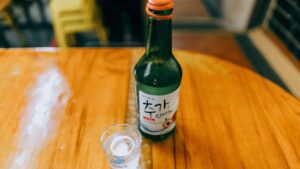
Discover Korean craft alcohol on your own terms. Learn the styles, use your taste preferences, and find your first bottle
 FREE DELIVERY for order from $180