Korean Traditional Liquor, Rare & Premium Imports in Singapore
Sool Cellar stands out as Singapore’s specialist importer of rare and premium Korean traditional liquors, carrying premium yakju, takju, and other time-honoured categories sourced directly from Korea’s finest craft breweries and distilleries. Every bottle is small-batch, handcrafted, and hand-picked by our team to represent the depth and diversity of Korea’s centuries-old brewing tradition.
These are not supermarket bottles. They are the kind of pours once reserved for royal courts and ancestral rite tables, now brought into Singapore in original packaging, ready for your next drink.
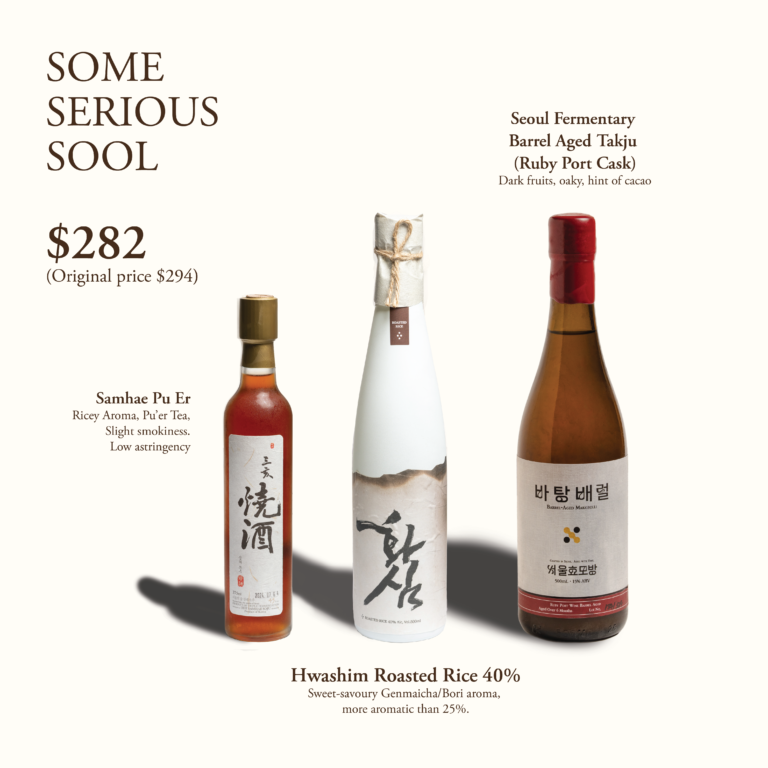
$294.00Original price was: $294.00.$282.00Current price is: $282.00.
What is Korean Traditional Liquor & What Makes It Special?
Korean traditional liquor sits under the broader umbrella of sool (술), the general Korean word for alcohol that covers everything from brewed rice wines to distilled spirits and fortified expressions. Every bottle begins with the same core ingredients: rice, water, and nuruk, a traditional fermentation starter that introduces wild yeast and mould cultures into the mash.
Once fermentation and coarse filtration are complete, the resulting brew is known as wonju, the base from which all traditional Korean alcohols are drawn. Left to settle, wonju separates naturally into two layers, from which different liquors are distilled:
The clear, golden top layer is drawn off to produce yakju or cheongju, the refined and clarified expression of Korean brewing.
The cloudier bottom layer is takju, the broader category of unfiltered Korean rice alcohol, full-bodied with deeper rice character. Makgeolli is the most widely recognised style of takju, typically lighter and lower in ABV.
Gwahaju takes this one step further: during fermentation, distilled premium soju is added to halt yeast activity and preserve residual sweetness, producing a fortified wine in the same spirit as European port or sherry.
Typical ABV ranges sit at less than 8% for makgeolli, more than 8% for takju, around 12% to 17% for yakju, and between 17% and 20% for gwahaju, depending on the producer.
During the Joseon Dynasty (1392 to 1910), clear rice wines like yakju held pride of place at royal ancestral rites, served in ritual goblets alongside sweet and white rice wines at ceremonies such as the Jongmyo Jerye.
How to Choose the Right Korean Traditional Liquor
If you’re new to Korean traditional liquor and looking for a place to start tasting, here is a simplified breakdown of the two main categories of spirits:
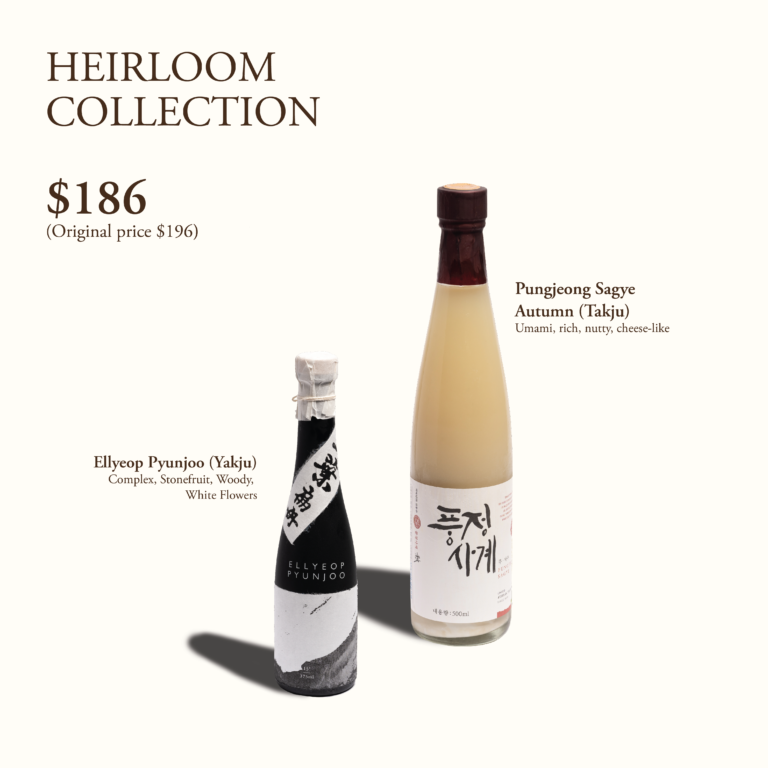
Yakju, or refined rice wine: Smooth, clear, and golden in colour, with floral aromatics and subtle fruit. Yakju is best served lightly chilled as an aperitif or alongside delicate dishes like sashimi, steamed seafood, and Korean temple cuisine. An uncomplicated taste like the Ellyeop Pyunjoo Yakju would be ideal for your first drink.
Takju, or unfiltered rice wine: Cloudier, fuller-bodied, and more grain-forward than yakju, with a creamier mouthfeel and pronounced rice character. Takju pairs naturally with savoury, fermented, and richer dishes, making it a flexible everyday pour.
For a fuller breakdown of how yakju, takju, and makgeolli relate to each other, see the FAQ section below.
Why Buy Korean Traditional Liquor from Sool Cellar
Sool Cellar is Singapore’s first and only dedicated craft Korean alcohol importer, so every bottle in our Korean traditional liquor range is chosen for its brewing integrity, provenance, and flavour.
Sourced Directly from Korea's Craft Breweries
Our team travels to Korea, tastes through production in person, and builds long-standing relationships with the families and brewers behind each label before importing. When you buy from Sool Cellar, sip in confidence knowing every pour has been chosen at the source by people who have stood in the brewery and tasted the liquor.
A Curated Selection of Imported Korean Traditional Liquor
Sool Cellar takes an editorial approach to curation. Our range balances historical pours from heritage breweries with new seasonal and limited releases from Korea’s contemporary sool movement, giving drinkers a chance to explore tradition or sample new expressions as they rotate through the shop.
No Preservatives, Authentically Brewed
Every Korean traditional liquor we stock is made in small batches with no added preservatives, no added sugar, and no artificial flavouring or colouring. Each bottle reflects the rice, the nuruk, the brewer’s expertise, and nothing else. Sweetness, where present, develops naturally through fermentation rather than through additives.
A Unique & Elegant Gift for Any Occasion
A gift of Korean traditional liquor immediately communicates prestige, history, and something your recipient has likely never tried before. Ideal for housewarmings, anniversaries, corporate gifting, Lunar New Year hampers, and Chuseok. For curated gift selections, reach out to us at enquiries@soolcellar.sg and we will put together a custom gift set tailored to the occasion..
Order Korean Traditional Liquor Online with Islandwide Delivery
Taste tradition when you order Korean traditional liquor online in Singapore directly from Sool Cellar, with islandwide delivery available.
Free delivery on orders of SGD 180 or more.
Flat fee of SGD 15 on orders below SGD 180.
Delivery timings: 9.30 am to 5.00 pm (Mon to Fri), 9.30 am to 12.30 pm (Sat). No deliveries on Sundays or public holidays.
All bottles are dispatched via end-to-end cold chain delivery.
Should be 9.30am – 5pm Mon to Fri, 9.30am – 12.30pm Sat. No deliveries on Sunday and PH.
For more information, please refer to our FAQ page.
FAQs
Frequently Asked Questions About Korean Traditional Liquor
What is the difference between yakju, takju, and makgeolli?
Yakju, takju, and makgeolli all come from the same rice-based brewing process. Yakju is the clear, refined liquid drawn from the top of the fermented mash. Takju is the cloudier, unfiltered liquid drawn from the bottom. Makgeolli is the most widely recognised style of takju, typically lighter in body and lower in alcohol (less than 8% ABV) for a more accessible drinking experience.
What is gwahaju and how is it made?
Gwahaju (과하주) is a traditional Korean fortified rice wine, made by adding distilled soju to a fermenting rice wine. The added alcohol stops fermentation early, preserves residual sweetness, and boosts the ABV to roughly 17 to 20%. The resulting liquor is richer, sweeter, and longer-lasting than standard yakju.
What is wonju and how does it differ from yakju?
Wonju (원주) is a brewer’s term for the entire fermented brew after coarse filtration and before any dilution. It’s the raw base from which both yakju (the clear top layer) and takju (the cloudy bottom) are drawn. Yakju is essentially wonju at its most refined and clarified.
Are there any common allergens in Korean traditional liquor?
Korean traditional liquor contains alcohol and typically includes rice and wheat-based nuruk. Some bottles may contain sulphites or herbal additions, depending on the producer. Check the relevant product page or contact our team at enquiries@soolcellar.sg for detailed ingredient information before purchasing.
Do Sool Cellar's traditional liquors contain preservatives or artificial sweeteners?
No. Every Korean traditional liquor stocked at Sool Cellar is sourced from craft breweries that work without added preservatives, artificial flavouring, or artificial colouring. Any sweetness in the bottle comes from the rice, the fermentation, or traditional infusions used by the brewer.
Is Korean traditional liquor suitable for vegetarians or vegans?
Korean traditional liquors at Sool Cellar are produced using plant-based ingredients: rice, water, nuruk, and in some cases herbs or fruit. Suitability can vary by producer and fining method. Check the product page, or contact our team for confirmation on any specific bottle.
How should Korean traditional liquor be served?
Yakju is best served lightly chilled between 8°C and 12°C in a white wine glass to lift its delicate aromatics. Takju and makgeolli are served well chilled and gently swirled before pouring to redistribute the natural sediment that settles at the base of the bottle. Both pair naturally with food and develop in character as they open up across a glass.
What food pairs well with yakju or takju?
Takju (including makgeolli) pairs well with savoury, fermented, and richly seasoned dishes. Classic pairings include doenjang and soy sauce-based dishes, Korean savoury pancakes (pajeon, jeon), kimchi and pickled vegetables, and dried or seasoned seafood. The natural effervescence and creamy body of takju cuts through fermented saltiness and brings out grain-driven savouriness.
Yakju holds up best alongside bolder, more pungent flavours. Try it with gochujang and ssamjang-based dishes, fermented seafood (jeotgal), roasted seaweed (gim), and seasoned or dried vegetables (namul). Its delicate floral notes and crisp finish balance the intensity of fermented Korean staples without being overwhelmed by them.
How should Korean traditional liquor be stored?
Yakju, takju, makgeolli, and gwahaju should all be stored in the refrigerator to preserve their flavour and freshness. As live, unfiltered, or partially fermented products, they remain sensitive to temperature even after bottling. Soju, by contrast, can be stored at ambient room temperature thanks to its higher ABV and distillation process.
Can I order Korean traditional liquor online for delivery in Singapore?
Yes. Sool Cellar delivers Korean traditional liquor islandwide across Singapore via our Korean liquor shop online. Free delivery applies to orders of SGD 180 and above, with a flat SGD 15 fee on orders below that threshold. Orders are processed and delivered within two business days.








 FREE DELIVERY for order from $180