

Most Singaporeans who meet Korean alcohol for the first time do so through Korean food. The natural next question is what pairs well with barbecue, fried chicken, or a big pot of kimchi jjigae. That approach works as a starting point, and it will keep any table happy. A more useful question, though, sits one step earlier: what do you already enjoy drinking?
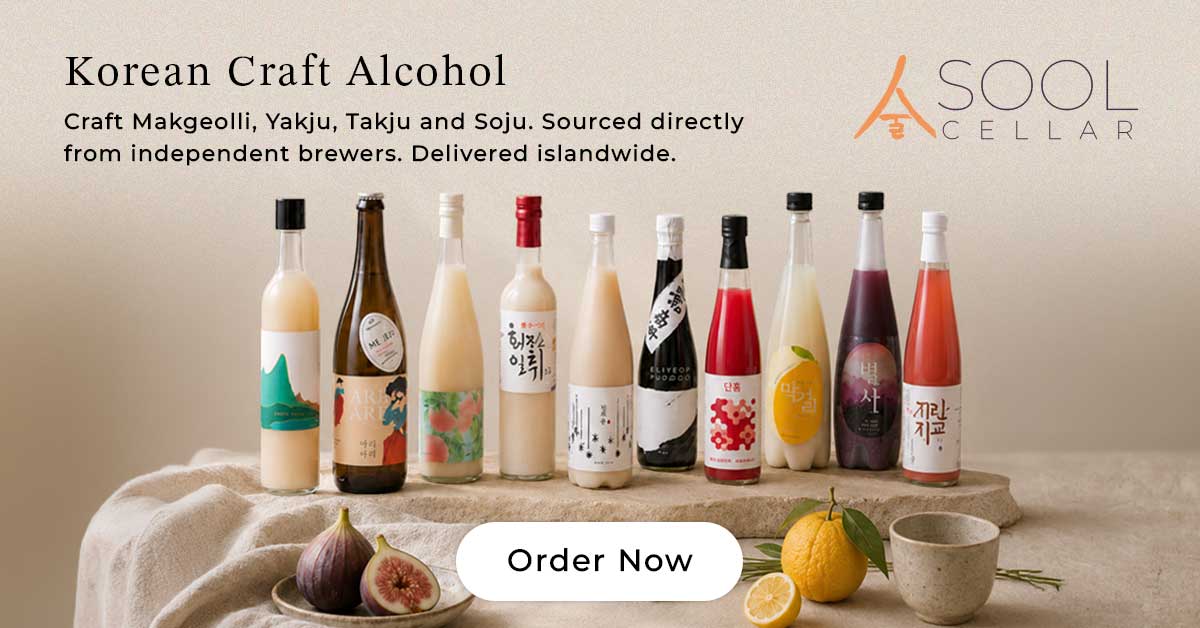
Korean craft alcohol spans a much wider flavour range than most drinkers in Singapore realise, from delicate and floral through to bold and spirit-forward. Finding a bottle you will actually love has less to do with pairing rules and more to do with knowing where to look on your own palate. This guide walks you through the broad territories of the category, gives you a taste-led way to find your natural entry point, and points to specific bottles from our shelves worth trying first. By the end you should have a clear sense of where to begin, and why the category has more to offer than a single green bottle at a barbecue table.
Ask most people in Singapore about Korean alcohol and the answer usually collapses into a single word: soju. That is understandable, given how widely the mass-market green bottle travels. The reality of the category is far more layered than a single mental picture allows.
In Korea, all types of alcoholic beverages are collectively referred to as sool, the general term you may see translated as Korean liquor on English-language labels and shop shelves. Under that umbrella sit the traditional rice alcohols, broadly divided into cloudy, unfiltered brews known as takju, and clear, filtered versions known as yakju or cheongju. Other styles, such as gwahaju, are fortified expressions of these fermented drinks, produced traditionally by adding a distilled spirit such as soju during fermentation to lift the alcohol strength and enrich the profile. Soju, meanwhile, is a distilled spirit traditionally made from fermented Korean rice alcohol, most commonly takju or yakju. Rice has historically been the primary ingredient, though grains such as barley, wheat, and buckwheat have all been used depending on regional availability, creating a diverse heritage of traditional soju that predates the mass-market version most drinkers picture today.
Many first-timers walk into a tasting expecting something close to the mass-produced Korean alcohol they know from supermarket shelves. What they meet on the table almost always surprises them: a range of profiles far more varied than they had imagined, and none of it quite drinking like sake or wine. It is a reaction we see again and again with drinkers who arrive curious: this is not what they expected, and the ground it opens is wider than they thought.
For a beginner, four broad styles are worth knowing:
Each has its own personality and its own reason to sit on your shelf. What follows is a way to find the one that will suit you first.
Rather than asking what you should drink, the more useful question is what you already reach for. Whether it is a sparkling white before dinner, a natural wine over a slow meal, a botanical gin at the end of the day, or a craft beer at the weekend, that habit is a strong clue. Korean craft alcohol has a style that will meet your palate where it already lives, and it tends to surprise drinkers who arrived thinking they knew what to expect.
The table below is a starting map. Use your existing preference in a familiar category as the door, then step through into the Korean side.
| If You Enjoy… | Try This Korean Craft Style | Why It Works |
| Sparkling wine or prosecco | Sparkling makgeolli or fruity takju | Effervescent, lower ABV, easy on the palate |
| Natural wine, orange wine, or sake | Yakju | Clean, complex, wine-adjacent character |
| Craft beer, wheat beer, or sour ales | Umami or rice-forward takju | Earthier, layered, more textural |
| Gin or botanical spirits | Gwahaju or barrel-aged craft soju | Aromatic, higher ABV, spirit-like |
| Whisky or aged spirits | Barrel-aged craft soju | Restrained, contemplative, made for sipping |
If you already know the taste profile you gravitate toward, that shortcut works just as well. Fruity and bright drinkers land naturally with a sparkling makgeolli or a fruit-forward takju. Sparkling lovers do best with a light, effervescent takju or makgeolli. Grain-forward, richer drinkers tend to enjoy a heavier takju or a considered yakju. Whisky drinkers with a taste for oak have barrel-aged craft soju waiting for them, and craft beer regulars will find a small selection of Korean craft options on our shelves worth tasting side by side with what they already know.
This is exactly the kind of thinking the flavour indicators on our product pages are built for. Once you have a style in mind, you can narrow further using the profile axes shown on every bottle listing.
Every bottle on our shop page carries four flavour indicators: Sweetness, Body, Acidity, and Dryness. They exist to translate what is inside the bottle into something you can read at a glance, especially when the category is new to you.
Combined, the four axes let you triangulate a bottle without opening it. If you want something bright and effervescent to start the evening, look for a light body, gentle sweetness, and medium acidity. Something more considered for after dinner would call for more body and a drier finish. A bottle for a shared meal with strong flavours might sit somewhere in the middle, with enough weight to hold its own and enough brightness to keep the palate moving. That is exactly why the indicators are there. They take the guesswork out of buying a category you may not yet know well, and let you shop in a way that mirrors how you already choose wine or spirits.
The three sit close together in a beginner’s mind, so it helps to set them apart clearly before turning to specific bottles. Understanding the distinction is the difference between opening any bottle and opening the right one for the mood you are in.
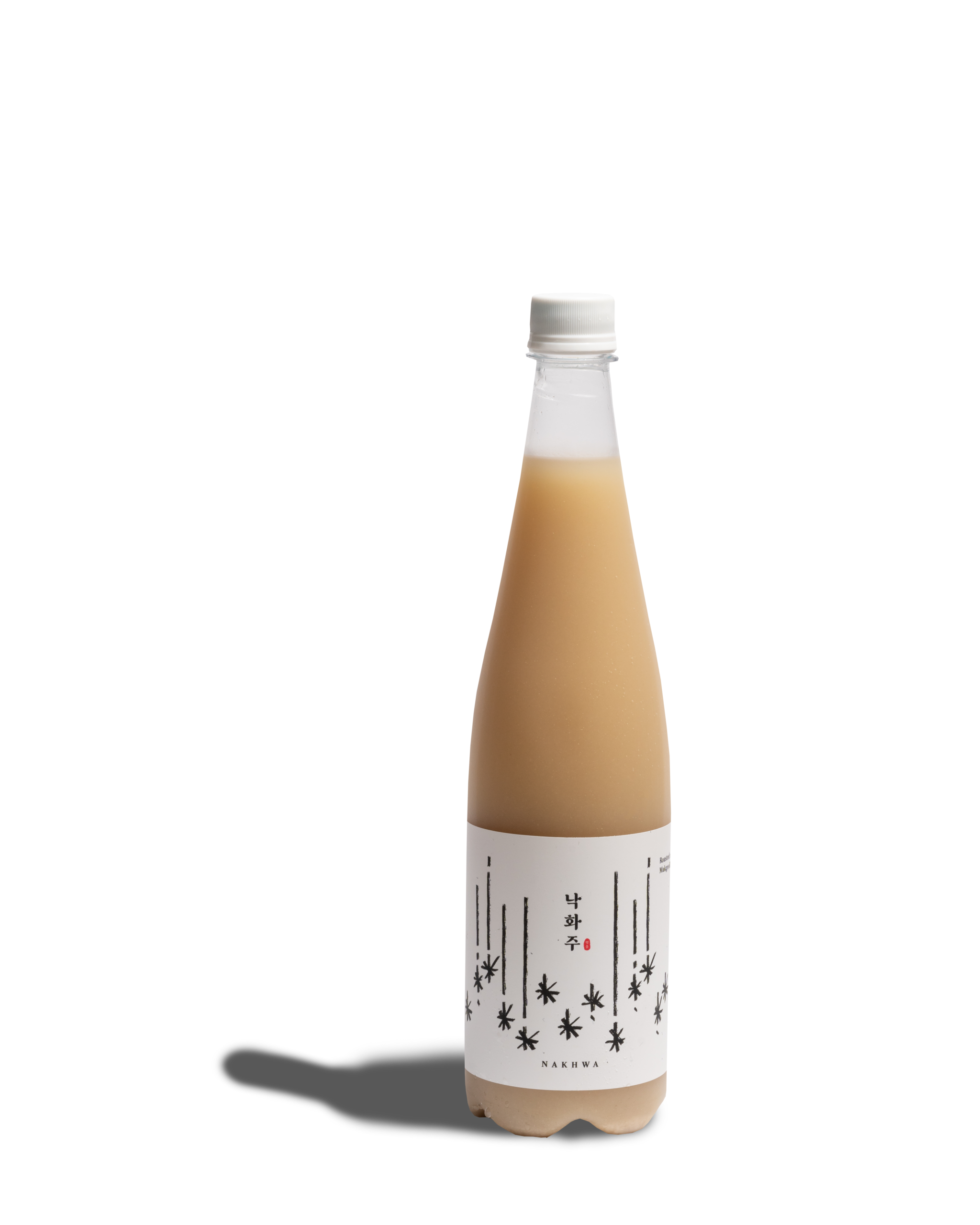
Makgeolli is the most widely recognised style of takju. It is unfiltered, sits at a lower ABV of typically less than 8 per cent, and is what most people picture when they think of Korean rice wine. Craft makgeolli keeps the sediment in the bottle, so the pour comes through with body and character rather than looking like clear water. Sweetness can range from gentle to more pronounced, and many bottles carry a soft natural fizz that keeps building quietly after sealing. Brewed without preservatives or artificial ingredients, the flavour you taste comes from the rice itself as nuruk and yeast do their work.
Three worth trying from our shelves:
Takju is the broader family of unfiltered Korean rice alcohols, of which makgeolli is one style. Produced by fermenting rice, water, and nuruk, the natural fermentation starter made from grains, takju keeps the rice solids in the liquid, giving it a cloudy appearance and a fuller body. It generally sits above 8 per cent ABV, one level up in weight and depth from most makgeolli, and rewards a slower kind of drinking. It is a natural next step for anyone who already enjoys craft makgeolli and wants more structure in the glass.
Two takju from our range worth knowing:
Yakju and cheongju are very similar. Both are clear, filtered Korean rice wines made from rice, water, and nuruk, and the terms are sometimes used interchangeably. Yakju generally refers to the traditional category, while cheongju often describes a cleaner, more refined style. Both generally sit around 12 to 17 per cent ABV, aromatic and closer in feel to a light white wine, so drinkers who love natural wine, orange wine, or fine sake tend to find their footing here quickly. It is often the style that opens the category up for people who thought it wasn’t for them.
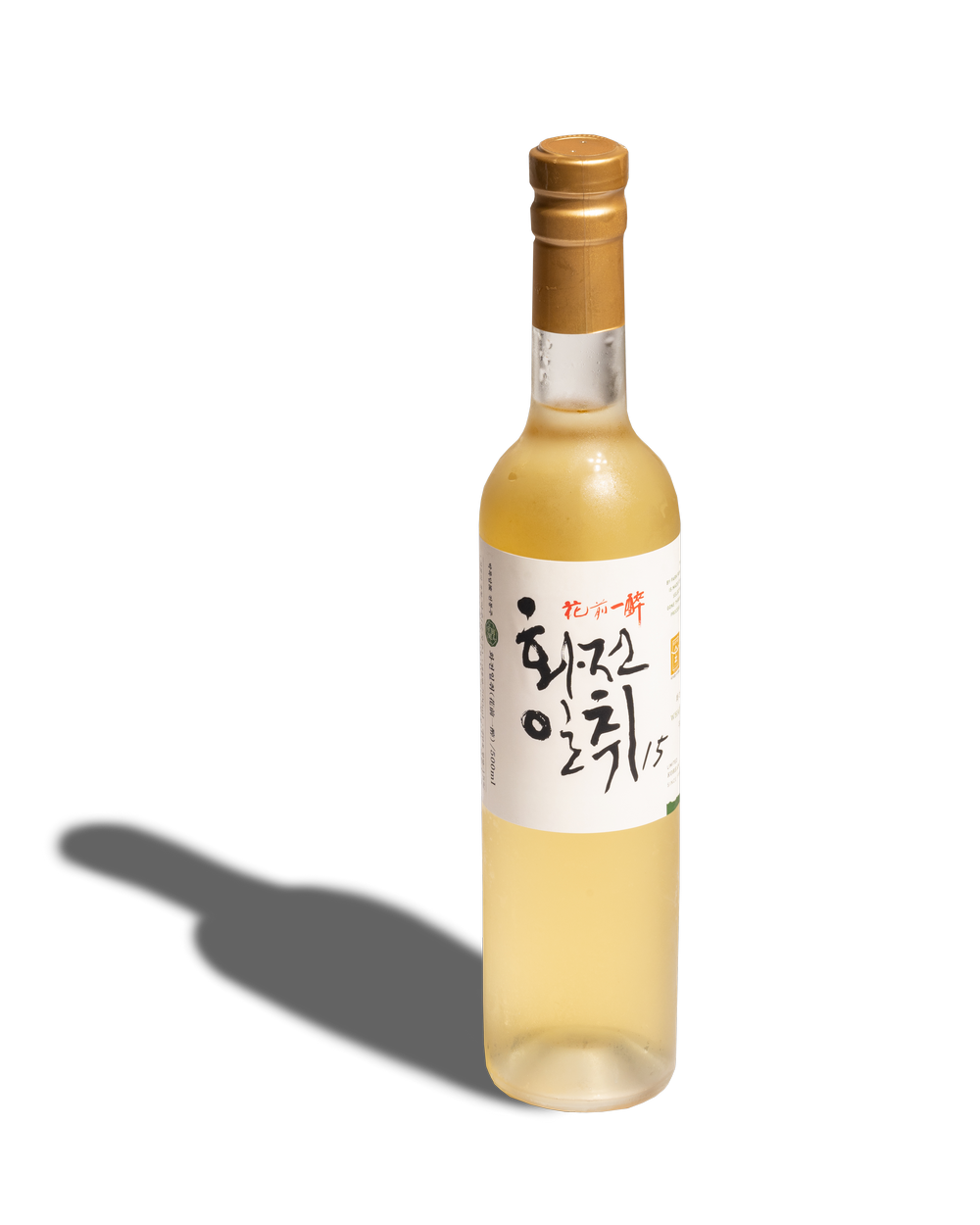
Four yakju from our shelves to consider:
If you are new to the category and want a single door in, our suggestion is to begin with a fruit-forward makgeolli, then move toward yakju once your palate has a feel for how the rice comes through. Between them, the two styles cover most of the range a curious drinker will want to explore in the first few months.
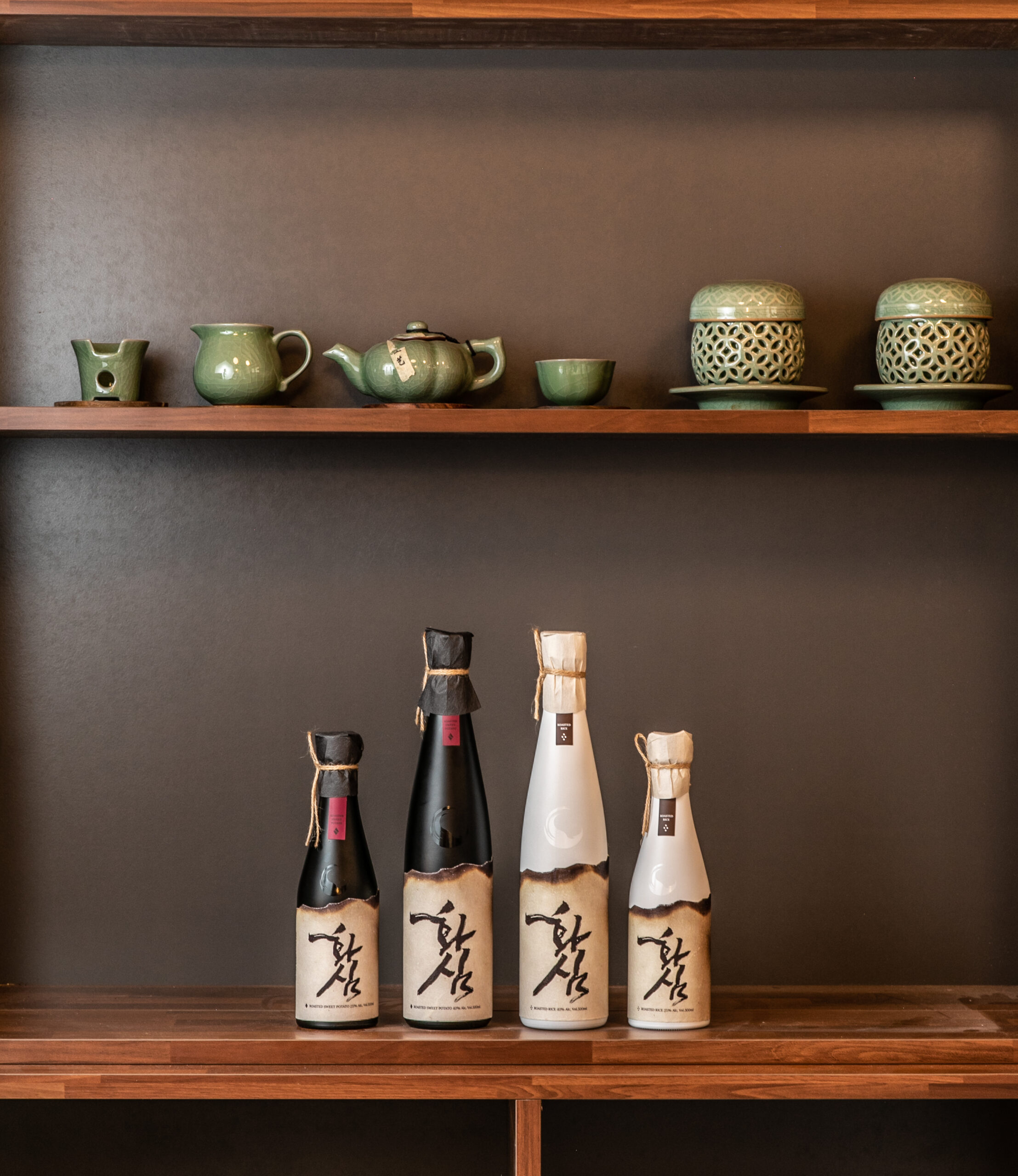
If you have met soju before, it was almost certainly the mass-market green-bottle version, cold and clean and gone before you thought much about it. That version has its place at a Korean barbecue table. Craft soju is a different proposition altogether, closer in feel to a considered spirit than a party pour.
Craft soju is distilled from real base grains, whether rice, sweet potato, or barley, with the natural character of those ingredients preserved rather than diluted out. It is typically distilled in small batches, which is what allows the character of the grain to come through in the glass. The result is a spirit with genuine complexity, a higher ABV that typically sits at 25 per cent and above, and a flavour profile that reflects what went into it. Some bottles are made for sipping neat. Others hold their own in a cocktail. A few are aged in oak in ways a whisky drinker will recognise straight away, offering a slower, more contemplative kind of pour.
Three from our shelves that show the range:
For readers wondering where to buy Korean soju online in Singapore, our shop carries the full craft range with islandwide cold-chain delivery. It is the most direct route to trying what small-batch Korean distilling actually looks like, without hunting bottle by bottle across town.
For anyone looking for the easiest possible entry point, Korean craft beer is a fair place to land. The territory is familiar: hops, malt, styles you already know. What is new is the Korean take on those styles, and the small independent breweries producing them.
Korean craft beer as a category is relatively young but has grown steadily, born out of a brewing movement that gained real momentum in the early 2010s after regulatory changes opened the door to small-scale independent production in South Korea. What sits on our shelves is a small, deliberately curated selection from those breweries. The range is tight on purpose, focused on bottlings that offer a genuine alternative to the mainstream Korean lagers most drinkers already know from restaurants and supermarkets.
For readers wondering where to buy authentic Korean craft beer online in Singapore, our shop stocks a curated selection with islandwide delivery. It is a quicker route than tracking down bottles case by case, and everything we carry has been chosen for what it delivers in the glass rather than for shelf recognition.
Korean craft alcohol was never built around the formal food pairing rules that shape wine culture. At a Korean barbecue table the pairing with soju tends to happen intuitively, and the same relaxed logic runs across the wider category: most drinkers simply reach for what they enjoy at that moment, and let the meal follow. For readers who like a starting point, though, the table below sets out a few natural affinities that tend to work well in practice.
| Style | Naturally Pairs Well With | Notes |
| Sparkling makgeolli | Light snacks, spicy dishes, casual meals | Effervescence resets the palate between bites |
| Takju | Korean BBQ, rich or fatty dishes | Brightness cuts through heavier flavours |
| Yakju | Seafood, cleaner-flavoured dishes | Refined profile matches restrained cooking |
| Craft soju | Grilled meats, fried dishes | A clean finish acts as a natural reset |
The best pairing, in the end, is the one you actually enjoy. Treat the table as a shortlist to try, rather than a rulebook to obey. Even within a single style there is enough variety that a bottle you love with barbecue one week might turn out to be equally happy alongside seafood the next.
Korean craft alcohol works best when it lives on your shelf, ready to open, rather than being saved for special occasions. A small, intentional shelf covers almost every mood without asking you to overthink. Our suggestion: one takju or makgeolli for casual pours, one yakju for slower meals, one craft soju for after-dinner sipping, and a Korean craft beer or two for the days when you want something familiar with a fresh angle. A note on storage: yakjus and takjus should live in the fridge, while sojus can sit at room temperature.
Four bottles is enough to start. From there, the shelf tends to grow at its own pace, guided by what you enjoyed most and where your curiosity leads next. A drinker who leans into a fruit-forward makgeolli often finds themselves reaching for another takju a month later. A yakju regular ends up wanting to try one that has spent time on oak. The category rewards that kind of patient exploration, and the shelf becomes a personal record of the palate you have built over time.
Our full portfolio is available for online delivery in Singapore, curated for exactly this kind of everyday accessibility. Delivery runs Monday to Friday from 9.30 am to 5.00 pm, and Saturday from 9.30 am to 12.30 pm, with no deliveries on Sundays or public holidays. The cold chain runs door to door to protect unpasteurised bottles, so what arrives on your doorstep is what left the shelf.
Korean craft alcohol does not need a reason to open. It just needs a glass.
Korean rice wine covers more ground than most drinkers expect. Two bottles from the same family, poured in the same

Craft soju is distilled from real grain. Learn how traditional Korean soju is made, why its ABV varies so widely,
Discover Korean craft alcohol on your own terms. Learn the styles, use your taste preferences, and find your first bottle
 FREE DELIVERY for order from $180