

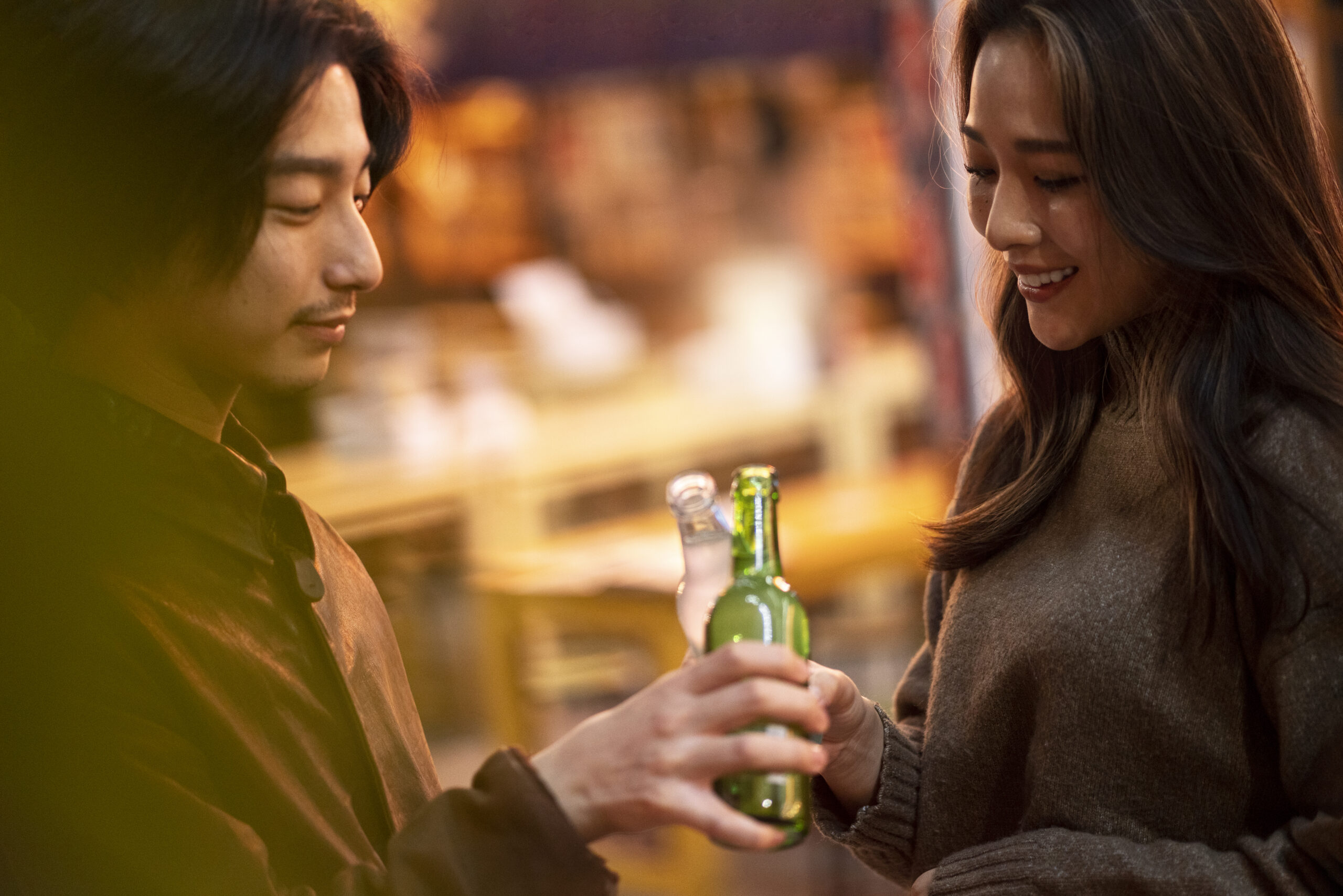
Soju brings to mind a green bottle: a staple of barbecue joints, a fixture in our favourite dramas, lined up along the supermarket aisle. We tend to assume that is all soju is, and all it has ever been.
The truth is, soju has two distinct identities. One is the diluted, neutral spirit sold in that familiar green bottle, the version that came to dominate from the 1960s onward. The other is a traditional distilled soju steeped in heritage, closer in strength and character to a fine whisky than to anything poured by the shot.
Most people in Singapore have only met the first. This guide is about the second: what craft soju actually is, how it is made, and why it is worth a conversation.
The split at the heart of the category even has formal names in Korean. Diluted soju is known as huiseoksik, and distilled soju as jeungryusik. The distinction between them runs far deeper than branding or price.
The green bottle most of us recognise is, at its core, a highly refined neutral ethanol brought down to drinking strength with water, then softened with sweeteners and flavourings. The companies behind many of these bottles are essentially blenders and bottlers rather than distillers, since the base spirit is bought in and finished rather than cooked from grain in-house. The result is consistent, light, and easy to drink, which is exactly what it was designed to be.
Traditional soju works the other way around. A craft distiller starts with grain, ferments it, and distils the result, so the character in the glass comes from the raw ingredients and the maker’s hand rather than from anything added afterwards. This is the older of the two traditions, and the one craft producers are reviving today.
The diluted style was not always dominant. Soju in the 1960s and 1970s commonly ran between 35 and 50 per cent ABV, a world away from the 17 to 25 per cent of today’s table-strength green bottles. The turning point came in 1965, when a grain management law restricting the use of rice for distillation effectively shut down traditional soju production. Distillers who had made rice-based spirits for generations were forced to stop or switch methods, and the diluted style filled the space they left. Only when those restrictions eased in 1991 did the older craft begin to return, and the revival is still gathering pace today.
Craft soju is built from grain, step by step, rather than blended from a spirit someone else refined. The process runs roughly like this.
At Sool Cellar, this traditional, distilled approach is the standard we source to, and our soju range comes entirely from distillers who work exactly this way.
If the difference is easier to see side by side, here is how the two traditions line up across the things that actually matter in the glass.
| Mass-Market Diluted Soju | Traditional Distilled Soju | |
| Base and source | Neutral ethanol, often bought in and blended | Grain, usually rice, fermented and distilled in-house |
| Production method | Dilution and flavouring of a refined spirit | Fermentation with nuruk or koji, then distillation |
| ABV range | Around 17 to 25 per cent | Roughly 20 up to 59 per cent |
| Sweeteners and additives | Commonly sweetened and flavoured | No added sweeteners or artificial flavouring |
| Flavour character | Clean, light, mild sweetness | Grain-driven depth, fruit, texture, real complexity |
| Best enjoyed | Chilled, by the shot, with food | Neat or lightly chilled, sipped slowly |
| Price tier | Everyday and inexpensive | Premium and craft |
Process is one thing; the experience in the glass is another. The Gamuchi range from Danong Bio makes a useful reference point, because the same base distillate is released at more than one strength, and tasting across those strengths shows what craft soju can do.
At 25 per cent, Gamuchi pours clean and gently sweet, with the rice character to the fore. There is orchard fruit in it, Fuji apple and Asian pear, lifted by soft white florals and carried on a creamy texture. Even at the lighter end of the scale, where you might expect a spirit to thin out, it holds its complexity.
At 43 per cent, the same spirit reveals a different face. Toasted rice comes through alongside an oily, mouth-coating richness, with white peach and a roasted, nutty depth. The finish leans toward something daiginjo-like, a refined, almost sake-adjacent elegance that the white koji fermentation helps to shape.
That a single base spirit can read so differently across dilution levels is itself a mark of the distiller’s skill, since holding aroma and balance together at each strength is far from a given. Broaden the view beyond one producer and the range widens further, as the grain a distillery chooses, the character of its starter, and the cut it takes off the still all feed into a house style. No two craft sojus taste quite alike, though what they share is intent: these are spirits made to be sipped and considered, closer to how you would approach a whisky or a fine sake than a round of shots.
Craft soju is at its best served neat or only lightly chilled, cool enough to be refreshing but not so cold that the aromatics close up.
From there, it is a surprisingly versatile thing at the table. Its clean strength and grain-driven character sit well beside dishes built on fermented pastes and sauces, bold pickled vegetables, and dried meat or fish, and it holds its own against aged cheese in a way few people expect.
Whichever bottle you reach for, craft soju rewards a little attention, equally at home at the dinner table and in the quiet hour after it.
One of the first things people notice about craft soju is how much its strength can vary. The soju alcohol content in a mass-market green bottle usually ranges from 17 to 25 per cent. Craft soju covers a far wider band, from around 20 per cent at the gentle end up to 59 per cent at the top, where the strongest bottles approach cask-strength whisky.
The reason comes back to method. Distillation concentrates alcohol, so a distilled spirit naturally carries more of it than a diluted one, and craft distillers set the final soju alcohol percentage to suit the style they are chasing rather than to hit a standard commercial figure. A higher-strength bottle is often built for slow sipping, a lower one for approachability and food.
Strength is not purely a technical or commercial decision either. Han Gyeong-ja, the founder of Danong Bio, chose to lead with a 25 per cent flagship for a reason worth knowing: she wanted her best distillate to be accessible to as many drinkers as possible, even though holding aroma and balance together at high dilution is the harder feat to pull off. That 25 per cent flagship went on to take the top prize for distilled spirits at the 2025 Korea Liquor Awards.
At the higher-ABV end, treat those bottles the way you would a good whisky: serve neat or lightly chilled, pour a small measure, and give it time. The ABV on the label is really a serving cue, a signal to pour small and drink slowly. The two bottles below sit at that most serious end of the category.
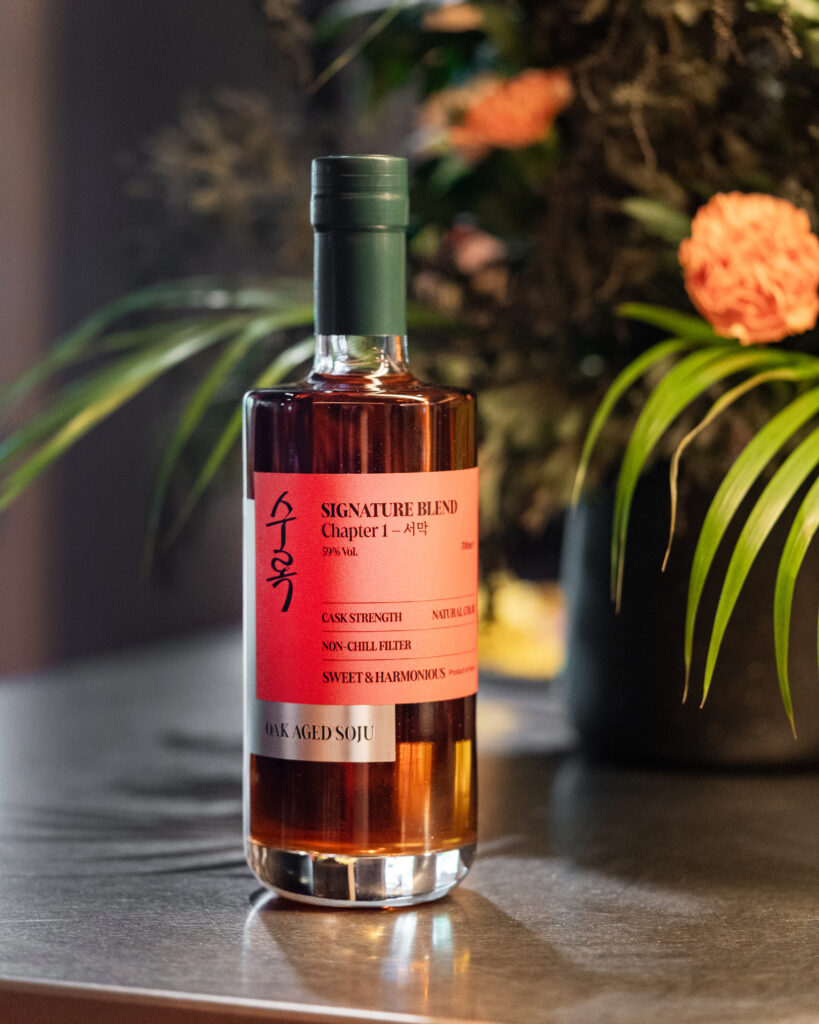
The most serious expressions are where distillation meets time and wood. Craft producers point out that a barrel-aged rice distillate can technically meet the definition of whisky, and maturation in oak or ex-bourbon casks adds depth, colour, and a rounded character while keeping the grain backbone intact. Two in our range show where this leads.
Finding traditional craft soju in Singapore has been genuinely difficult until recently. The category sits in the shadow of the mass-market version most people already know, and few importers here source distilled soju directly from the distilleries, so the best bottles rarely arrive.
Sool Cellar exists to close that gap: we build direct relationships with makers like Danong Bio, Hwasim Jujo, and the Paju brewery behind Gamhongro, sourcing on the ground and bringing their bottles to Singapore through an end-to-end cold chain. If you have only ever known soju as the green bottle, our Korean alcohol store shows how much wider the category runs, and our soju collection is the place to start. And if you arrived here by way of makgeolli or Korean craft beer, the same care and direct sourcing run through everything we bring in, and there is always more of the category worth discovering.

Korean rice wine covers more ground than most drinkers expect. Two bottles from the same family, poured in the same

Craft soju is distilled from real grain. Learn how traditional Korean soju is made, why its ABV varies so widely,
Discover Korean craft alcohol on your own terms. Learn the styles, use your taste preferences, and find your first bottle
 FREE DELIVERY for order from $180